Aluminum vs Cast Iron Dutch Oven: Which Is Better? (November 2026)
Cast iron wins the aluminum vs cast iron Dutch oven choice for most home cooks. It holds heat steadier, goes from stovetop to oven to campfire, and the enameled Lodge model adds easy cleaning and no rust worry.
On this page (9 sections)
- Aluminum vs cast iron Dutch oven: the quick verdict
- Aluminum vs cast iron Dutch oven side by side
- Heat retention: which metal holds steady?
- Weight and handling: what you lift matters
- Oven and heat-source range: where each one works
- Cooking surfaces and acidic food
- Care and cleaning: what each pot asks of you
- Which one should you buy?
- Final word on aluminum vs cast iron Dutch ovens
Cast iron wins the aluminum vs cast iron Dutch oven choice for most home cooks. It holds heat steadier, moves from stovetop to oven to campfire, and the enameled Lodge model adds easy cleaning and no rust worry.
Aluminum heats fast and feels light in the hand. That speed is handy for a quick simmer, but it fades the moment the pot leaves the burner.
This comparison looks at heat, weight, oven limits, cooking surfaces and care. By the end you'll know which metal suits your kitchen and which Lodge pot we'd pick first.

Aluminum vs cast iron Dutch oven: the quick verdict
Choose cast iron for braises, bread and any pot that has to move between heat sources. Pick aluminum only when weight is the main problem.
For most homes, the enameled cast iron pot does more jobs with less fuss.
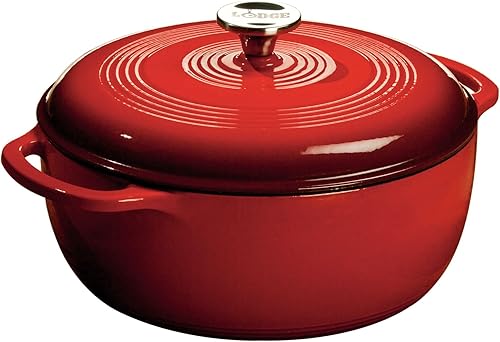
Our top pick is the Lodge Essential Enamel Cast Iron Dutch Oven, which scores 9.7. The porcelain enamel gives you cast iron's heat retention without seasoning, and the 6-quart size fits a family meal or a loaf of sourdough.
The Lodge 7 Qt Cast Iron Dutch Oven scores 8.4. It's the better choice for campfire cooking and for anyone who wants a lid that doubles as a skillet.
A bare aluminum Dutch oven is lighter, but it lacks the oven range and the acidic-food safety of enamel. That gap decides the choice for most buyers.
If you're weighing other metals too, our comparison of stainless steel vs cast iron covers the third option in this category.
Aluminum vs cast iron Dutch oven side by side
Cast iron brings heat retention and oven range; aluminum brings light weight and quick warm-up. The table below sets the two metals against each other on the points that change daily cooking.
| Product | Best for | Capacity | Material | Oven safe | Our score |
|---|---|---|---|---|---|
| Lodge Essential Enamel Cast Iron Dutch Oven | most kitchens | 6 quarts | Enameled cast iron | 500 °F | 9.7 |
| Lodge 7 Qt Cast Iron Dutch Oven | camp and open fire | 7 quarts | Seasoned cast iron | 400 °F | 8.4 |
The two Lodge pots show how far cast iron can stretch. The enameled 6-quart model covers baking, braising, marinating and refrigerating in one piece.
The seasoned 7-quart model adds grill and campfire use with a lid that flips into a skillet.
Aluminum's advantages are real but narrow. A light pot is easier to lift and to wash, and it reaches cooking temperature faster on a weeknight.
Those gains come with limits. Bare aluminum is softer, can react with acidic ingredients and often carries a lower oven rating than enameled cast iron.
For a closer look at the enameled side, see our guide to cast iron vs enameled dutch oven.
What the numbers say about the two metals
Heat retention and oven limits are the two numbers that matter most. The Lodge Essential's cast iron body holds heat evenly and recovers slowly, while its enameled finish pushes the oven rating to 500 °F.
The seasoned 7-quart Lodge tops out at 400 °F, but it trades that headroom for open-fire and grill use. Both pots weigh well over 13 pounds, so the weight gap against aluminum is real.
Aluminum's edge is speed. It reaches cooking temperature quickly and sheds heat just as fast, which suits a short stovetop simmer and little else.
Heat retention: which metal holds steady?
Cast iron holds heat longer and recovers slower; aluminum responds faster and cools faster. That difference shapes how each pot behaves during a long braise or a loaf of bread.
The Lodge Essential uses cast iron under its enamel, so the pot keeps a steady temperature once it's hot. That suits dishes that need a long, even simmer, like stews, chilis and pot roasts.
Lodge says its cast iron is designed for uniform cooking and helps reduce hot spots. For bread baking, the heavy walls and fitted lid trap steam and hold the oven's heat around the dough.
Aluminum is a better conductor in the sense that it moves heat quickly into the food. The catch is that it also loses that heat quickly when you add cold ingredients or open the oven.
For a slow-cooked meal, cast iron's slower response is the feature you want. For a fast sauté before a simmer, aluminum's quick warm-up saves a minute or two.
Weight and handling: what you lift matters
Cast iron is much heavier, so plan for two hands; aluminum is easier to move but can slide on a burner. The weight gap is the first thing you notice when you lift either pot.
The 6-quart Lodge Essential weighs 13.5 pounds, and the 7-quart seasoned Lodge weighs 17.6 pounds. An aluminum pot of similar size is typically lighter, which matters if you have weak wrists or a small sink.
The enameled Lodge has easy-grip dual handles and a cook-and-serve design. Those handles help when you carry a full pot from the stove to the table or the oven.
The seasoned 7-quart model uses loop handles and a cast iron lid. Its lid doubles as a dual-handle skillet, so one piece covers two jobs at camp or in the kitchen.
Heavier also means steadier. A cast iron pot sits firmly on a burner and resists sliding when you stir.
An aluminum pot can shift on a smooth glass cooktop if you're not careful.
Oven and heat-source range: where each one works
Enameled cast iron goes from stovetop to oven to 500 °F; seasoned cast iron adds grill and campfire use. Aluminum's range depends on the pot, and many bare aluminum models stop well below that.
The Lodge Essential is stovetop compatible and oven safe up to 500 °F. Lodge lists gas, electric, ceramic and induction cooktops as supported, so it fits almost any kitchen.
The 7-quart seasoned Lodge is oven safe to 400 °F, and Lodge says it moves from ovens and stovetops to grills and campfires. That lower oven limit is the trade-off for a pot built to take open fire.
Aluminum heats up fast on the stovetop but often has a lower oven ceiling. Some aluminum pots also warp or discolor with high heat, so check the rating before you bake in one.
If you bake bread or roast meat at high heat, the 500 °F enameled model gives more headroom. For camp cooking and sourdough on a grill, the seasoned 7-quart is the stronger pick.
Cooking surfaces and acidic food
Enamel protects cast iron from acidic ingredients; bare aluminum can react with them. This is the point that decides a lot of tomato-sauce and chili recipes.
The Lodge Essential's porcelain enamel surface is stain-resistant and does not react with food. Lodge says you can marinate, cook, refrigerate and serve in the same pot, which suits acidic marinades and tomato braises.
Seasoned cast iron like the 7-quart Lodge relies on its oil seasoning rather than enamel. It's PFAS free and made with only iron and oil, but long simmers of acidic food can wear the seasoning over time.
Bare aluminum is the most reactive of the three. Acidic dishes can pick up a metallic taste and leave the pot dull or discolored.
Anodized aluminum reduces this, but plain aluminum does not.
If your Dutch oven sees a lot of chili, curry or vinegar-based braises, enameled cast iron is the safest bet. For neutral dishes and campfire cooking, seasoned cast iron works well.
Care and cleaning: what each pot asks of you
Enameled cast iron is the easiest to live with; seasoned cast iron needs oil and hand washing; aluminum is light but can stain. Care is where the metals separate day to day.
The Lodge Essential is dishwasher safe, though Lodge recommends hand washing with warm, soapy water and a nylon scrub brush to keep the finish in shape. Its enamel resists rust and stains, so you don't have to season it.
The 7-quart seasoned Lodge needs hand washing and a light oil coat after cleaning. Lodge says the durable finish improves with use and stays easy to clean with proper care.
Skip soap on bare seasoning when you can, and dry it fully to prevent rust.
Aluminum is light and often easy to wash, but it can pit or discolor with harsh cleaners. Avoid steel wool on bare aluminum unless the maker allows it.
Our rundown of the best cast iron Dutch ovens covers seasoning and care in more depth. If you want a smaller seasoned pot for everyday use, the Lodge 5 quart review looks at that size.
How the enameled finish changes cleanup
The enameled Lodge Essential does not ask you to build or maintain a seasoning layer. Its porcelain enamel surface is stain-resistant, so tomato sauce and wine braises wipe out without leaving a dull patch.
The pot is also dishwasher safe, a rarity for cast iron. Lodge still recommends hand washing with warm, soapy water and a nylon scrub brush to keep the finish in tip-top shape.
Hand washing is the safer habit, but the dishwasher option is there for busy nights.
How the seasoned finish changes cleanup
The seasoned 7-quart Lodge works the other way. It ships with a natural oil finish that improves with use, so each wash and oil coat is part of the routine.
Hand washing is required, and you dry it fully before a light oil coat to keep rust away. Lodge builds this pot from iron and oil only, with no synthetic coating and no PFAS.
The upkeep is real, but the finish takes rough handling and open fire without flaking.
Which one should you buy?
Buy the enameled Lodge Essential if you cook on multiple heat sources and want easy cleanup. Buy the seasoned 7-quart Lodge if campfires and skillet lids are part of your plan.
Skip both for a light aluminum pot only if lifting weight is your top concern.
The Lodge Essential suits most kitchens because it covers braising, baking, marinating and refrigerating without seasoning. Its 6-quart capacity fits family meals, and the 500 °F oven rating handles high-heat bread baking.
The dishwasher-safe enamel is the clincher for anyone who dislikes pot scrubbing.
The 7-quart seasoned Lodge suits campers, grill cooks and sourdough bakers who want a lid that turns into a skillet. Its 7-quart capacity handles big batches, and the PFAS-free seasoned finish takes rough handling.
The lower 400 °F oven limit and the seasoning routine are the costs.
Aluminum makes sense in one case: you want the lightest pot you can lift and you cook mostly quick, neutral dishes on the stovetop. If you need oven range, acidic-food safety or a pot that doubles as a serving dish, cast iron is the better buy.
Our best cast iron Dutch ovens roundup compares sizes and finishes if you're still deciding. For the full enameled vs seasoned picture, the cast iron vs enameled guide breaks down the two cast iron styles.
Final word on aluminum vs cast iron Dutch ovens
For most readers, cast iron is the better Dutch oven, and the enameled Lodge Essential is the one to buy. It brings steady heat, a 500 °F oven rating and a surface that shrugs off acidic food.
Aluminum's light weight and fast warm-up are real, but they don't offset its lower oven range and its reaction to acidic dishes. The seasoned 7-quart Lodge is the pick when fire and a skillet lid matter more than easy cleaning.
Make the call on three things: how often you bake or braise at high heat, whether acidic food goes in the pot, and how much weight you want to lift. If the answers point to cast iron, the enameled 6-quart covers the most ground for the most cooks.
Frequently asked questions
Is cast iron better than aluminum for a Dutch oven?
Cast iron is better for most cooks because it holds heat longer and works on the stovetop, in the oven and over a fire. Aluminum heats faster and weighs less, but it loses heat quickly and is often limited to stovetop or moderate oven use.
Why is cast iron so heavy compared with aluminum?
Cast iron is a dense metal, so a 6-quart enameled pot like the Lodge Essential weighs 13.5 pounds. Aluminum pots of similar size often weigh about half as much.
The extra weight is the trade-off for steady heat and durability.
Does aluminum react with acidic food in a Dutch oven?
Bare aluminum can react with tomatoes, citrus and vinegar, which may leave a metallic taste or discolor the pot. Enameled cast iron like the Lodge Essential has a porcelain enamel surface that does not react with acidic food, so you can simmer tomato sauces safely.
Can I use a cast iron Dutch oven on an induction cooktop?
Yes. The Lodge Essential Enamel Cast Iron Dutch Oven is stovetop compatible on gas, electric, ceramic and induction cooktops.
Aluminum only works on induction if it has a magnetic base, so check the pan before you buy.
Which is easier to clean, aluminum or cast iron?
Aluminum is lighter to handle and often easier to wash. The enameled Lodge Essential is dishwasher safe, but hand washing with warm, soapy water and a nylon brush is recommended.
Seasoned cast iron needs hand washing and a light oil coat.