Are Dutch Ovens Oven Safe?
Most Dutch ovens are oven safe, but the pot, lid, and knob may have different heat limits. Check the instructions for your exact model before heating it.
On this page (11 sections)
- Are Dutch Ovens Oven Safe?
- Are Dutch ovens oven safe at any temperature?
- Which Dutch oven should you choose for oven use?
- Does the Dutch oven lid have the same heat limit?
- How do bare cast iron and enameled pots differ in the oven?
- Can a Dutch oven go from the refrigerator into a hot oven?
- Can Dutch ovens go under the broiler?
- What should you check before baking bread in a Dutch oven?
- What mistakes should you avoid with an oven-safe Dutch oven?
- What should you do if the heat limit is unclear?
- Are Dutch ovens oven safe: which one should you buy?
Are Dutch Ovens Oven Safe?
Most Dutch ovens are oven safe, but the pot, lid, and knob may have different heat limits. If you’re asking “are Dutch ovens oven safe,” check the instructions for your exact model before heating it.
Bare and enameled cast iron both work in ovens when the cookware is approved for that use. The safe temperature depends on the model and every part that will be heated, including the lid and knob.
Are Dutch ovens oven safe at any temperature?
No, oven safe does not mean safe at every temperature. Use a temperature within the lowest stated limit for the pot and all parts you plan to put in the oven.
The Lodge 5 Qt Cast Iron Dutch Oven has a 400°F temperature rating. The Lodge 6 Qt Enameled Dutch Oven and Mueller DuraCast 6 Qt Dutch Oven are described as oven safe up to 500°F, so their limits should not be treated as the same.
Read temperature limits as a guide for the specific model, not for every pot from the same brand. If a recipe needs more heat than your cookware allows, choose another cooking vessel or adjust the recipe only when its instructions permit it.
Which Dutch oven should you choose for oven use?
Choose by the oven temperature you need, the finish you prefer, and how you’ll handle the pot. The four options here range from bare cast iron with a 400°F rating to enameled models with stated 500°F limits or broiler guidance.
The Lodge 5 Qt Cast Iron Dutch Oven suits cooks who want bare cast iron for both indoor and outdoor cooking, and who are comfortable with hand washing and seasoning care. Skip it if your recipes regularly exceed its 400°F rating or you want an enameled surface that does not need seasoning.
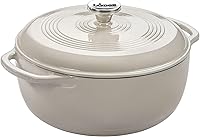
The Lodge Essential Enamel 6 Qt is a practical choice if you want a larger, enameled pot with a stated 500°F oven limit. Its care instructions recommend hand washing with warm, soapy water and a nylon brush; choose another model if you want a pot that is specified as dishwasher safe.
The Cuisinart Chef’s Classic Enameled Dutch Oven fits cooks who want a 7 qt capacity, induction compatibility, and a product described as oven and broiler safe. No specific oven temperature is given, so it may not suit you if you need a confirmed high-temperature limit before buying.
The Mueller DuraCast 6 Qt suits cooks who want an enameled pot with a stated 500°F oven limit and a stainless steel knob. Skip it if hand washing is not a routine you want to follow, since its care instructions specify hand washing.
Does the Dutch oven lid have the same heat limit?
Not always; the lid or knob may set the safe limit for the assembled pot. Check the instructions for each part before putting the Dutch oven in the oven with its lid on.
Some lids are cast iron, while knobs may use another material. A knob safe at moderate heat may not tolerate a hotter setting, even when the pot itself can.
The Cuisinart Chef’s Classic is described as oven safe with an oven-safe knob, and its product details also say it is broiler safe. Since no temperature limit is given, confirm the instructions for your exact model before using high heat or the broiler.
Do not remove or replace a knob based on guesswork. Follow the cookware instructions, especially when using the broiler or a high oven temperature.
How do bare cast iron and enameled pots differ in the oven?
Both finishes can be oven safe, but their care needs differ. The model’s heat limit and handling instructions matter more than the finish alone.
Bare cast iron needs seasoning and careful cleaning to protect its cooking surface. See how to season a cast iron Dutch oven and how to clean one without harming the seasoning.
Enameled cast iron has a coating over the iron, so it does not need seasoning. Avoid sudden temperature changes and use care with the coated surface; compare bare and enameled cast iron Dutch ovens if you’re choosing between the two finishes.
The Mueller DuraCast’s stated 500°F oven limit makes it an option for hotter recipes, subject to its instructions for the pot and lid together.
Can a Dutch oven go from the refrigerator into a hot oven?
Avoid sudden temperature changes unless the maker’s instructions allow them. Moving cold cookware straight into a hot oven can stress cast iron or enamel.
Let the pot move toward room temperature first if its instructions call for that. Do not set a hot pot on a cold or wet surface, and do not pour cold liquid into a very hot pot unless the cookware instructions allow it.
An oven-safe rating describes approved oven use, not every heating and cooling method. For stovetop use, read whether a Dutch oven works on a gas stove.
Can Dutch ovens go under the broiler?
Only use the broiler when the complete pot is approved for broiler use. Direct heat can exceed the limit for a knob or another part, even when the pot is oven safe.
The Cuisinart Chef’s Classic is described as broiler safe, but no specific temperature is given. Confirm the instructions for your model and keep the pot clear of the heating element unless those instructions say otherwise.
Do not infer broiler safety from an oven-safe label. Use the broiler only when the pot, lid, and knob are approved for it.
What should you check before baking bread in a Dutch oven?
Confirm that the pot and lid can handle the recipe’s oven temperature. Then follow the cookware instructions for preheating, adding dough, and moving the hot pot.
Bread recipes often use a covered pot to hold steam during baking. The lid and knob must be safe at the recipe temperature, not just the base.
For the bread method, see how to bake bread in a Dutch oven. Check your cookware instructions before preheating an empty pot.
What mistakes should you avoid with an oven-safe Dutch oven?
The common mistake is treating the oven-safe label as permission to use any temperature or heating method. Check the model limit, the lid and knob guidance, and any instructions about preheating or temperature changes.
Avoid these errors:
- Assuming a pot’s limit also applies to its lid and knob.
- Using a broiler because the pot is oven safe.
- Moving cold cookware into a hot oven or placing a hot pot on a cold surface.
- Heating an empty pot when the instructions do not allow it.
- Using metal tools or abrasive scrubbers on enamel if the care guide warns against them.
- Handling a hot pot without dry oven mitts.
The pot, lid, and handles can remain hot after cooking. Put the Dutch oven on a stable, heat-safe surface and leave enough room to lift it securely.
What should you do if the heat limit is unclear?
Find the exact model instructions or ask the maker before using the pot in the oven. A general label or another model’s temperature rating cannot confirm your pot’s safe limit.
Check the model name or number on the cookware or packaging. Confirm the guidance for the pot, lid, and knob, then use the lowest limit among the parts that will go into the oven.
If you’re still deciding whether a Dutch oven fits your cooking, browse what you can cook in a Dutch oven.
Are Dutch ovens oven safe: which one should you buy?
Choose the Lodge bare cast iron model if 400°F covers your recipes and you want cookware for indoor or outdoor use. Pick the Lodge enamel or Mueller DuraCast if you want a stated 500°F oven limit, and consider the Cuisinart if broiler use and a 7 qt capacity matter more than having a published temperature limit.
Before buying, match the recipe’s heat to the model, confirm the lid and knob instructions, and decide which care routine fits your kitchen. That’s the practical answer to “are Dutch ovens oven safe”: the right one is safe when you use the complete pot within its confirmed limits.
Frequently asked questions
Can all Dutch ovens go in the oven?
No. Many cast iron and enameled Dutch ovens are oven safe, but materials, handles, lids, and knobs differ.
Check the instructions for your exact pot and its parts, including the maximum oven temperature.
If you can’t confirm a limit, contact the maker before using it in the oven.
Can a Dutch oven lid go in the oven?
Often, but the lid’s material and knob can set a different heat limit from the pot. Check the instructions for both parts, especially if the knob is plastic or another material that may not tolerate high heat.
Remove the lid only if the maker says to do so.
Can you put an empty Dutch oven in the oven?
Follow the maker’s instructions before heating a Dutch oven empty. Sudden or uneven heating can stress cookware, and an empty pot may heat faster than one with food inside.
Avoid moving a cold pot straight into a hot oven unless the instructions allow that method.
Are enameled Dutch ovens oven safe?
Many enameled Dutch ovens are oven safe, but the safe temperature depends on the pot and its lid or knob. Check the exact model’s instructions, since limits vary.
Avoid sudden temperature changes, which can stress the enamel, and use oven mitts when handling hot cookware.