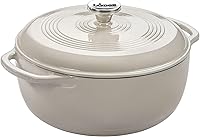
Can You Use a Dutch Oven on an Induction Cooktop?
Yes, you can use a Dutch oven on an induction cooktop when its base is magnetic. Bare cast iron and most enameled cast iron pots work; test the base with a fridge magnet first.
On this page (9 sections)
- Why does a Dutch oven work on an induction cooktop?
- How can you tell if your Dutch oven is induction compatible?
- Which Dutch ovens are induction compatible?
- What should you check before buying an induction-ready Dutch oven?
- How do you cook with a Dutch oven on induction?
- What are the downsides of a Dutch oven on induction?
- How do you care for an enameled Dutch oven used on induction?
- Can you use a Dutch oven on other cooktops too?
- The bottom line on using a Dutch oven on induction
Yes, you can use a Dutch oven on an induction cooktop when the pot's base is magnetic. Bare cast iron and most enameled cast iron Dutch ovens work on induction, because the cooktop needs a magnetic base to create heat.
Test your pot with a fridge magnet before the first cook. If a magnet sticks to the bottom, the pot will heat.
If it doesn't, the cooktop won't detect it. So the real question when you ask "can i use dutch oven on induction cooktop" is not about the brand or the shape, it's about the base material.
Why does a Dutch oven work on an induction cooktop?
Induction heats the pot itself, not the glass. The cooktop's coil creates a magnetic field, and the field makes the metal base vibrate and warm up.
Cast iron is strongly magnetic, so a bare cast iron Dutch oven is a natural fit. The enamel coating is thin and sits over the iron, so the field still reaches the base.
The enamel also has a practical benefit on a glass cooktop. It's a smooth, non-porous surface that won't react with acidic food the way bare iron can.
The key detail is the base, not the sides. A pot with a thick cast iron base and magnetic body will work, while a light aluminum pot with a colorful enamel finish will not.
How can you tell if your Dutch oven is induction compatible?
Hold a fridge magnet against the base. If it sticks firmly and stays put, the base is magnetic and should work on induction.
If it slides off easily or barely grabs, the cooktop likely won't detect the pot. Do this test on the flat bottom, not the side wall.
Some pots have a magnetic base ring but non-magnetic sides, and that's fine, because the base is what touches the cooktop. Check the bottom for a symbol too, since many cookware makers stamp an induction coil icon or the word "induction" on the base.
If the base is rusty or heavily scored, clean it first. A rough base can still work, but it may mark the glass, so lift rather than slide when you set it down.
Which Dutch ovens are induction compatible?
Cast iron pots are the safe bet, and most enameled cast iron models are induction compatible. The three below all state induction compatibility in their product details.
The Cuisinart Chef's Classic has a porcelain enameled interior and exterior over cast iron, wide handles, and an oven-safe knob. It's 7 quarts and round, with a 12.99 inch diameter.
Cuisinart lists it as induction compatible. The Mueller 6 quart has a high-gloss enamel finish and a tight-fitting lid with raised nodes that baste food as it cooks.
Mueller says it's safe for all cooktops, including induction, and oven safe up to 500°F. The Lodge Essential is 6 quarts with a porcelain enamel surface that stands up to acidic ingredients.
Lodge says it works on gas, electric, ceramic and induction cooktops, and in the oven up to 500°F.
What should you check before buying an induction-ready Dutch oven?
Match the base to your cooktop's ring size and check the oven rating. A magnetic base is the first requirement, but size and heat limits decide whether the pot is comfortable to use.
Induction rings are marked on the glass. A pot whose base is much smaller than the ring can fail pan detection or heat unevenly.
A base close to the ring size gives the best contact and the steadiest simmer. Look at the oven rating too, since many Dutch oven recipes finish in the oven.
A 500°F limit covers most braises and bread bakes. Check the knob material as well, because some knobs are only oven safe to a lower temperature than the pot.
Weight matters on a glass cooktop. A full 7 quart cast iron pot is heavy, so wide handles and a secure grip help when you lift it on and off the ring.
Which Dutch oven is best for a first induction pot?
The Cuisinart Chef's Classic suits a household that wants a large pot for soups, braises and batch cooking. Its 7 quart capacity and 12.99 inch diameter give plenty of surface for browning meat before a long simmer.
The porcelain enamel interior won't absorb odors or react with acidic ingredients, so it handles tomato-based stews without a metallic taste. Cuisinart says it's dishwasher safe, though hand washing keeps the enamel looking better.
This is the pick if you cook for four or more people and want one pot that moves from the induction ring to the oven. The size is the trade-off: it takes up a lot of cabinet space and is heavy when full.
Which Dutch oven is best for smaller kitchens?
The Mueller 6 quart fits tighter cabinets and smaller induction rings while still handling family portions. It's round with a tight-fitting lid and basting nodes, and Mueller rates it to 500°F in the oven.
The high-gloss enamel resists rust and builds a natural non-stick interior over time. Mueller lists it as dishwasher safe but recommends hand washing, which is the usual advice for enameled cast iron.
Choose this one if your induction cooktop has smaller rings or your storage space is limited. The 6 quart size is smaller than the Cuisinart, so it's less suited to very large batches.
Which Dutch oven is best for bread and acidic dishes?
The Lodge Essential is the pick for bread bakers and anyone who cooks a lot of acidic food. Its porcelain enamel surface won't react with tomatoes or wine, and Lodge says it's oven safe to 500°F.
Lodge says the enamel is PFAS free and stain resistant. The dual handles and cook-and-serve design make it easy to carry from the induction ring to the table.
This is the one to choose if you bake no-knead bread or simmer acidic sauces often. Lodge recommends hand washing to keep the pot in good shape.
How do you cook with a Dutch oven on induction?
Start on a low to medium setting and let the pot heat gradually. Induction responds fast, and cast iron holds heat well, so a high setting can overshoot before the food is in the pot.
Preheat the empty pot for a minute or two on medium, then add oil or fat. Add food once the surface is hot, and adjust the ring down as the pot comes up to temperature.
A cast iron pot keeps cooking after you lower the heat. Use the ring that matches the base size, and center the pot on the marked circle.
Small rings under a large pot waste contact, and large rings under a small pot can fail detection. Don't slide the pot across the glass, and lift it when you move it, especially when it's full.
Our guide to what you can cook in a Dutch oven covers braises, breads and one-pot meals that suit induction cooking.
What are the downsides of a Dutch oven on induction?
The main trade-offs are weight and glass care. A full cast iron pot is heavy to lift, and the enamel base can mark the cooktop if you're careless.
Induction rings are smaller than some pot bases, so a very large Dutch oven may overhang the ring. That's safe, but the outer edge of the base won't heat as directly.
The glass surface scratches more easily than a gas grate. Set the pot down gently and keep the base clean, since a gritty base dragged across the glass leaves marks.
Heat-up is fast, so simmering needs a lower setting than you'd use on gas. Expect to adjust until you learn how your cooktop responds to cast iron.
How do you care for an enameled Dutch oven used on induction?
Let the pot cool before washing, and dry it fully. Thermal shock can crack enamel, so don't run a hot pot under cold water.
Hand wash with warm water and a mild detergent. Avoid metal scouring pads, which dull the enamel.
A nylon brush handles stuck food without damage. Dry the pot completely before storing it, since a little moisture trapped under the lid can cause rust spots on exposed iron rims.
Store the lid off or slightly open so air circulates. Check the base for scratches now and then, because a smooth base heats more evenly and is gentler on the glass.
If the enamel chips on the cooking surface, stop using the pot on induction until you've checked whether the damage exposes bare iron.
Can you use a Dutch oven on other cooktops too?
Yes, most cast iron Dutch ovens work on gas, electric and ceramic cooktops as well. Induction compatibility doesn't limit you to one heat source.
Bare cast iron and enameled cast iron both sit safely on gas grates. Our guide to whether you can use a dutch oven on a gas stove covers flame control and heat distribution.
An enameled pot also works in the oven, which is where many Dutch oven recipes finish. See whether Dutch ovens are oven safe for temperature limits and knob ratings.
Campfire cooking is a different case. An enameled pot can go over coals, but the enamel is more fragile there.
Read about whether you can use an enameled dutch oven on a campfire before you pack it for a trip.
The bottom line on using a Dutch oven on induction
A magnetic base is the whole test. If a fridge magnet sticks to the bottom of your pot, you can use it on an induction cooktop.
If not, the cooktop won't heat it, no matter how the pot looks. For most kitchens, a cast iron or enameled cast iron Dutch oven is the right choice.
The Cuisinart Chef's Classic suits large batches, the Mueller 6 quart fits small kitchens and rings, and the Lodge Essential is the pick for bread and acidic dishes. So when you ask "can i use dutch oven on induction cooktop," check the base first, and a magnet tells you what you need to know before the first cook.
Frequently asked questions
Can I use a Dutch oven on an induction cooktop?
Yes, when the base is magnetic. Bare cast iron and most enameled cast iron Dutch ovens work on induction.
Aluminum and some ceramic or glass pots do not, because the cooktop needs a magnetic base to create heat.
How do I know if my Dutch oven works on induction?
Hold a fridge magnet against the base. If it sticks firmly, the pot is magnetic and should work on induction.
If it slides off or barely holds, the base is not magnetic enough and the cooktop likely won't heat it.
Do I need a special Dutch oven for induction?
No. You need a pot with a magnetic base, which most cast iron Dutch ovens already have.
A full induction-compatible set is not required, and an ordinary enameled cast iron pot with a magnetic base is enough.
Does the size of the Dutch oven matter on induction?
Yes. The base needs to cover the cooktop's marked ring closely so the sensor detects the pot.
A base much smaller than the ring can trip the cooktop's pan detection and stop the heat.
Can an enameled Dutch oven scratch an induction cooktop?
It can mark the glass if you slide a heavy pot or set it down hard. Lift the pot when you move it and set it down gently.
A clean base and a smooth cooktop reduce the risk of scratches.