Can You Deep Fry in an Enameled Dutch Oven?
Yes, you can deep fry in an enameled Dutch oven. The thick cast iron holds heat well, so the oil temperature stays steady when food goes in. Use a pot with plenty of headroom, keep the oil below the rim, and never heat it empty.
On this page (9 sections)
- Why does an enameled Dutch oven work for deep frying?
- Which Dutch oven is best for deep frying?
- How much oil should you use?
- How do you control the oil temperature?
- Is deep frying in an enameled Dutch oven safe?
- Does deep frying damage the enamel?
- How do you clean up after deep frying?
- Can you deep fry on a gas stove?
- Which pot should you pick for deep frying?
Yes, you can deep fry in an enameled Dutch oven. The thick cast iron holds heat well, so the oil temperature stays steady when food goes in.
Use a pot with plenty of headroom, keep the oil below the rim, and never heat it empty.
The enamel coating also helps here. It resists staining and won't react with food, so frying chicken, doughnuts or fries won't leave a metallic taste.
The main rules are about oil volume, temperature and keeping the pot stable on the burner.
Why does an enameled Dutch oven work for deep frying?
Enameled cast iron is a strong choice for deep frying because it holds heat and releases it slowly. That steady heat matters when cold food hits the oil.
A thin pot cools fast and the oil temperature dips, which makes food greasy.
The heavy walls and base spread heat across the whole pot, not just the center. That gives you fewer hot spots where food browns too fast.
The enamel surface is smooth and non-porous, so it wipes clean more easily than bare cast iron.
There is one limit to keep in mind. Enamel is a glass-like coating, so it chips if knocked hard.
A heavy pot full of hot oil needs a stable, flat burner and careful handling. Set it down gently and keep the handles clear of the stove edge.
Which Dutch oven is best for deep frying?
Pick a heavy, wide pot with a snug lid and a flat base. Round enameled Dutch ovens in the 5.5 to 6 quart range give you enough oil depth without filling the pot too far.
The three picks below all fit that job.
Best for steady heat on family frying nights
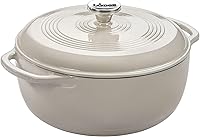
The Lodge Essential Enamel Cast Iron Dutch Oven is the top pick for deep frying at home. Lodge says the cast iron gives even heat distribution and strong heat retention, which is exactly what frying asks for.
The 6 quart size takes a useful depth of oil and still leaves room for bubbling.
Its enamel surface won't react with acidic marinades or batters, so you can fry and then simmer a sauce in the same pot. Lodge rates it oven safe to 500 degrees Fahrenheit and safe on gas, electric, ceramic and induction cooktops.
The matching cast iron lid helps hold heat between batches and keeps splatter contained.
The trade-off is weight. At about 13.5 pounds empty, a full pot is heavy to lift.
Set it on a burner close to your work area and don't carry it around the kitchen.
Best for dual handles and easy cleanup
The Lodge 6 Qt Enameled Dutch Oven brings the same cast iron build with dual easy-grip handles that make it easier to steady when you set it down or move it from the stove to a heat-proof trivet.
The porcelain enamel resists stains and won't react with food, so frying oil and batter wipe away without soaking. Lodge says it's dishwasher safe, though hand washing with warm, soapy water and a nylon brush keeps the finish in better shape.
It's oven safe to 500 degrees Fahrenheit and works on gas, electric, ceramic and induction.
Its oyster-white color shows splatter more than a dark pot does. That's a cosmetic issue, not a cooking one, but expect to wipe the outside after a frying session.
Best for smaller batches and first-time fryers
The Overmont Enameled Cast Iron Dutch Oven is a good fit if you fry in smaller batches. Its 5.5 quart capacity suits a household of 3 to 5 people and takes less oil to reach a usable depth than a larger pot.
Overmont says the triple-layer enamel needs no seasoning and resists staining from acidic foods.
The heavy self-basting lid has condensation bumps, which matters more for braising than frying. Still, the lid is useful for covering the pot while the oil heats and for smothering flare-ups.
The set also includes a cookbook and two cotton handle covers, so you have a grip on hot handles.
Overmont lists it as oven safe to 500 degrees Fahrenheit and safe on gas, electric, ceramic and induction cooktops. The smaller size means more batches for a big crowd, so plan your timing around that.
How much oil should you use?
Fill the pot no more than halfway to two-thirds full. That headroom is what keeps hot oil from spilling over when cold or wet food goes in.
For a 6 quart pot, that means roughly 2 to 3 quarts of oil.
Don't guess by eye alone. Leave at least 2 inches between the oil surface and the rim before you start.
A pot filled too high bubbles over fast, and hot oil on a burner is a fire risk.
Use an oil with a high smoke point, such as peanut, canola or vegetable oil. Reuse oil only a couple of times, and strain it between uses.
Toss oil that smells off or has turned dark.
How do you control the oil temperature?
Heat the oil gradually and check it with a thermometer. Most fried foods cook best at 350 to 375 degrees Fahrenheit.
Clip a candy or deep-fry thermometer to the side of the pot so the bulb sits in the oil but doesn't touch the bottom.
Start on medium heat and let the oil come up slowly. Cast iron takes a few minutes to heat through, and a slow rise gives you more control.
If the oil smokes, it's too hot. Pull the pot off the heat and let it cool before adding food.
Add food in small batches. Each piece drops the oil temperature, so give it time to climb back before the next batch.
Crowding the pot also traps steam and makes fried food soggy.
Is deep frying in an enameled Dutch oven safe?
Yes, when you follow the basics. Keep the pot on a stable burner, keep the lid nearby and never leave hot oil unattended.
Keep children and pets out of the kitchen while you fry.
Pat food dry before it goes in. Water and hot oil don't mix, and wet batter causes violent bubbling.
Lower food in slowly with tongs or a slotted spoon rather than dropping it.
Wipe up spills as soon as they cool, and keep a pan lid or a fire blanket within reach. If a grease fire starts, smother it with the lid and turn off the burner.
Never pour water on burning oil. Our guide to using an enameled Dutch oven on a campfire covers heat safety in another setting.
Does deep frying damage the enamel?
Deep frying itself doesn't harm enamel. The oil heats well below the temperatures that would damage the coating, and the smooth surface resists staining from frying oil.
The real risks are thermal shock and physical knocks.
Don't plunge a hot pot into cold water. Let it cool fully first, or the enamel can crack.
Use wooden or silicone tools rather than metal tongs that scrape the surface. Our post on whether Dutch ovens are oven safe explains the temperature limits in more detail.
Over time, a faint brown tint can build up on the inside. A paste of baking soda and water lifts most stains without scratching the enamel.
Avoid steel wool and harsh abrasives.
How do you clean up after deep frying?
Let the oil cool completely, then pour it into a sealed container. Don't pour it down the sink, where it can clog pipes.
Wipe the pot with paper towels to remove most of the oil before washing.
Wash with warm, soapy water and a nylon scrub brush. Lodge recommends hand washing to keep the finish in top shape, though its pots are dishwasher safe.
Dry the pot fully before storing it so no water sits on the enamel.
Clean the burner and stovetop around the pot too, since splatter spreads further than you expect. A little effort now prevents a greasy film from building up.
If your cooktop is induction, see our guide on whether you can use a Dutch oven on an induction cooktop.
Can you deep fry on a gas stove?
Yes, gas stoves work well for deep frying in a Dutch oven. The open flame gives quick, adjustable heat, and a cast iron pot sits steady on the grate.
Keep the flame moderate so it doesn't lick up the sides of the pot.
Set the burner so the flame stays under the base. A flame that climbs the sides can overheat the pot and make the oil hot too fast.
Watch the thermometer and turn the heat down as the oil approaches your target.
Make sure the pot sits flat on the grate without wobbling. For more on burner types and heat control, read whether you can use a Dutch oven on a gas stove.
Which pot should you pick for deep frying?
The Lodge Essential Enamel Cast Iron Dutch Oven is the best pick for most people. Its 6 quart size takes a useful depth of oil and its cast iron build keeps the temperature steady through several batches.
Choose the Lodge 6 Qt Enameled Dutch Oven if its dual handles and easy cleanup matter more to you. Choose the Overmont if you fry smaller batches and want the included cookbook and handle covers.
Whichever you pick, the rules stay the same. Keep the oil below the fill line, fry on a stable burner, and never leave the pot alone.
With those habits, an enameled Dutch oven handles deep frying well and stays in good shape.
Frequently asked questions
Can you deep fry in an enameled Dutch oven?
Yes. Enameled cast iron holds heat well and keeps oil steady during frying.
Use a heavy pot with a lid nearby, keep the oil below the fill line, and heat it gradually on the stovetop.
How much oil should you put in a Dutch oven for deep frying?
Fill the pot no more than halfway to two-thirds full. That leaves room for the oil to bubble up when food goes in.
A 6-quart pot handles about 2 to 3 quarts of oil comfortably.
What oil temperature is right for deep frying?
Most foods fry at 350 to 375 degrees Fahrenheit. Use a thermometer clipped to the pot and let the oil come back to temperature between batches.
Watch the pot the whole time.
Is it safe to deep fry on a glass-top stove?
Yes, with care. Use a pot that sits flat on the burner and keep the heat moderate.
Wipe up spills right away and never move a pot full of hot oil.
Can you deep fry with the lid on?
No. Keep the lid off while frying so steam can escape and you can watch the food.
Have the lid within reach to smother a grease fire if one starts.