Cast Iron vs Ceramic Dutch Oven: Which Is Better? (November 2026)
Pick enameled cast iron for most kitchens, because it browns well, holds heat and shrugs off acidic food. Bare ceramic wins only when you want a lighter pot and gentle, even heat for slow simmering.
On this page (11 sections)
- The quick verdict: which pot wins for most cooks?
- Cast iron vs ceramic: side by side
- Which one browns and sears better?
- Does weight decide it for you?
- How does each handle acidic food and seasoning?
- Which is easier to clean and care for?
- Stovetop and oven performance
- Cast iron vs ceramic Dutch oven for bread baking
- Who should buy which?
- Which pots fit this choice?
- Verdict: cast iron or ceramic for your kitchen?
Pick enameled cast iron for most kitchens, because it sears meat, holds heat and ignores acidic food. A bare ceramic pot is lighter and gentle on slow simmers, so the cast iron vs ceramic dutch oven decision mostly comes down to how you cook and how much you want to lift.
Enameled cast iron gives you the heat retention of iron behind a glassy coat. That coat is why tomato sauces and citrus braises don't taste metallic, and why you don't need to season the pot after washing.
Ceramic brings a lighter pot and a glaze that warms slowly. It suits soups and stews where browning isn't the point.
The fewer the sears and the bigger the task of lifting, the more ceramic makes sense.
The quick verdict: which pot wins for most cooks?
Enameled cast iron is the better choice for most people, and the Lodge Essential 6-quart is our top pick overall at 9.7. It sears, bakes bread and holds a simmer, with an enamel coat that saves you from seasoning and rust.
The ceramic column wins when the pot barely leaves the stove and never meets a high flame. Think rice, beans, soups and gentle curries.
Those dishes reward even, low heat, and they don't need a heavy sear.
Our score weighs specs, features and buyer feedback against what you're shopping for. The Lodge Essential leads because it covers the widest range of cooking tasks in one 6-quart pot.
It is also PFAS free, so the coating is a non-toxic enamel rather than a chemical finish that can leach into long simmers.
If you want to compare the enameled route against bare iron in more depth, our guide to cast iron vs enameled dutch oven breaks down those two options next.
Cast iron vs ceramic: side by side
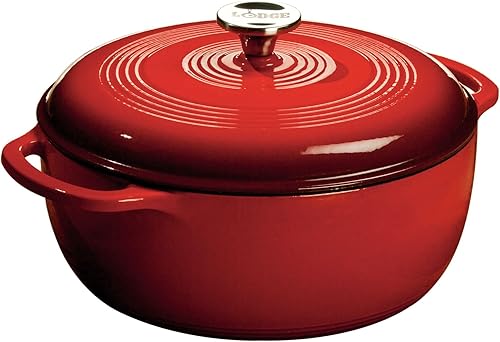 Best for braising and browning
Lodge Essential Enamel Cast Iron Dutch Oven
 Best for color in an indigo kitchen
Lodge Essential Enamel Cast Iron Dutch Oven
Iron wins on browning and durability, ceramic wins on weight and gentle heat. The table below sums up where each one pulls ahead.
| Feature | Enameled cast iron | Bare ceramic |
|---|---|---|
| Heat retention | High, stays hot after the flame drops | Moderate, warms and cools slowly |
| Searing | Strong browning on the base | Light browning, uneven at high heat |
| Weight | Heavy, about 13.5–14.9 lb at 6 qt | Lighter for the same size |
| Acidic food | Fine when enameled | Fine when fully glazed |
| Seasoning | None | None |
| Oven rating | 500 F on the pots here | Varies by model |
| Best use | Braises, bread, roasts, frying | Soups, stews, grains, serving |
The cast iron vs ceramic Dutch oven question often hides a second question: enameled or bare? Enameled cast iron solves the rust problem without losing the sear.
Bare iron needs oil and a dry-down after every wash, while the enamel coat lets you skip that step entirely.
Ceramic does bring a real advantage in the hand. A glazed ceramic pot of the same size usually weighs less, and that matters when you carry a full pot from the oven to the table.
The trade is a lighter pan that gives up some of the searing punch.
Our best cast iron dutch oven roundup covers the bare and enameled iron options if you want to stay on that side of the fence.
Which one browns and sears better?
Cast iron browns better because its mass holds heat when cold food hits the pan. A ceramic pot loses temperature at the contact point, so meat steams before it browns.
For stew meat, that means working in small batches. Too much meat at once drops the temperature and leaves you with gray chunks instead of a dark crust.
The Lodge Essential's cast iron base and sidewalls spread heat evenly. Lodge rates it to 500 F, which leaves room for a hot oven sear or a stovetop brown before the braise goes in.
That upper limit also covers bread baked at high heat, so one pot handles the sear and the loaf.
Why the sear matters for flavor
Browning is where the flavor starts. A hard sear on beef or chicken builds the crust that gives a braise its depth, and that crust needs a pan that stays hot as food goes in.
Iron is built for that moment. Ceramic gives a softer, more gradual brown, which is fine for vegetables but leaves meat pale.
Ceramic can brown, but expect to use a lower flame and more time. If golden crusts and skillet-style frying matter, iron pulls ahead.
If you mostly simmer, the gap narrows.
Does weight decide it for you?
Ceramic is usually lighter, and that matters more than most people admit until they lift a full pot. A 6-quart enameled cast iron pot like the Lodge Essential weighs 13.5 lb empty, before the stew.
The Amazon Basics 4.3-quart enameled pot drops to 11.2 lb, and the reduced size is as much help as the reduced mass. A smaller pot also takes less space on the stove and in the sink.
Bare ceramic of the same capacity tends to sit lighter still, which helps if you have weak wrists or a high shelf for storage. Lifting a full pot to the oven is the moment that difference shows.
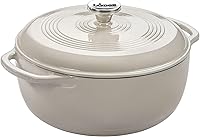
The weight gap grows with size. The Lodge 6 Qt Enameled Dutch Oven in Oyster White checks in at 14.9 lb, the heaviest pick in this comparison, while the Indigo and Island Spice Red pots land at 13.5 lb.
Those extra pounds show when the pot is full and you reach for the lid with one hand.
If you can't safely move a heavy pot, choose smaller and lighter. A 4.3-quart enameled pot suits 3 to 4 people, and it will get more use than a huge pot you avoid lifting.
How does each handle acidic food and seasoning?
Enameled cast iron and fully glazed ceramic both skip seasoning and handle tomatoes. Bare cast iron is the one that reacts with acid and needs a protective layer of oil.
That's why the enamel coat on the Lodge pots changes the daily routine. You can simmer a tomato sauce, marinate in the pot and refrigerate the leftovers without worrying about a metallic taste.
The porcelain enamel surface stands up to acidic ingredients and will not react with your food.
Bare cast iron is not out of the running, but it asks more of you. Dry it fully after washing and rub a thin film of oil on the cooking surface so rust stays away.
That coat is what keeps the cooking surface from rusting and what keeps acid from eating into the iron.
Lodge says the Essential is dishwasher safe, though hand washing with warm, soapy water and a nylon brush keeps the enamel in better shape. There is no oiling step and no seasoning cycle, which is the whole reason the enameled side suits busy kitchens.
Which is easier to clean and care for?
Both are easy to clean when glazed, and both reward gentle tools. Warm soapy water and a soft sponge handle everyday messes in either pot.
Skip metal utensils and abrasive scrubbers on enamel and ceramic alike. A scratched glaze is permanent, and it gives food a place to stick.
Amazon Basics adds one more rule on its pot: avoid citrus-based cleaners and metal utensils so the enamel stays pristine.
The Lodge pots are dishwasher safe, though hand washing is the recommendation to protect the finish. A quick soak lifts braise residue without hard scrubbing.
A nylon scrub brush does the same job on baked-on bits without dulling the gloss.
Bare cast iron is the one that needs a full dry and an oil rub after each wash. If you know yourself and won't do that, stick to enamel or ceramic.
Cleaning tips for both glazed surfaces
Let the pot cool before washing. A sudden cold soak on a hot enamel or ceramic pot can stress the glaze.
Soak stuck-on food in warm water rather than reaching for a scraper, and store the lid loosely so the rim can breathe.
Stovetop and oven performance
Enameled cast iron is the more flexible of the two, because it goes from a high stovetop sear into a hot oven. The Lodge Essential is rated to 500 F and works on gas, electric, ceramic and induction cooktops.
That range covers a sear on the burner, a braise in a moderate oven and bread baked at high heat. The dual handles and moisture-sealing lid make the move from oven to table simple.
The cook and serve design means the pot can go straight to the table for serving.
Ceramic is often rated for oven use too, but the ceiling varies by model. A ceramic pot that tops out lower limits you to gentle bakes and stovetop simmering.
That makes the ceramic side a better fit for soups and stews than for high-heat roasting or a 450 F bread bake.
| Product | Best for | Capacity | Diameter | Weight | Our score |
|---|---|---|---|---|---|
| Lodge Essential Enamel Cast Iron Dutch Oven | braising and browning | 6 qt | 10.75 in | 13.5 lb | 9.7 |
| Lodge Essential Enamel Cast Iron Dutch Oven | color in an indigo kitchen | 6 qt | 13.5 lb | 9.6 | |
| Amazon Basics Enameled Cast Iron Dutch Oven | small households | 4.3 qt | 11.2 lb | 9.4 | |
| Lodge 6 Qt Enameled Dutch Oven | a neutral white kitchen | 6 qt | 10.9 in | 14.9 lb | 9.1 |
Cast iron vs ceramic Dutch oven for bread baking
Cast iron wins for bread, because a hot, heavy pot and lid trap steam and give a crisp crust. Preheating an enameled cast iron pot to 450 F or higher is a common bread routine, and the Lodge Essential handles that range.
The moisture-sealing lid holds steam around the loaf for the first part of the bake. That steam keeps the crust from setting too early, which lets the loaf rise fully.
A ceramic pot can bake bread if it's rated for the temperature, but the lighter mass loses heat when the cold dough lands. Expect a paler crust and a slower spring.
The heavy lid on an iron pot also stays put, while a light lid can lift and let the steam escape.
The 6-quart size fits a round boule with room to spare. For smaller loaves, the 4.3-quart Amazon Basics pot works, and its round shape and dual handles make the move from oven to counter easy.
Who should buy which?
Buy enameled cast iron if you sear, braise and bake, and buy ceramic if you simmer and want less weight. Most readers land on the iron side once they see how often they reach for a hard sear.
The Lodge dutch oven 5 quart review is worth a look if a slightly smaller iron pot suits your counter and your lifting limit. It's also a fair stepping stone if the 6-quart options feel too wide for your storage.
Choose enameled cast iron if
- You brown meat before braising and want a dark crust.
- You cook tomato, wine and citrus dishes without a metallic taste.
- You bake bread and need a pot rated to high oven heat.
- You want one pot for stovetop, oven and table.
- You want a color that adds a pop to the kitchen, since the Lodge pots come in Island Spice Red, Indigo and Oyster White.
Choose ceramic if
- You mostly simmer soups, beans and grains.
- You want a lighter pot for lifting and washing.
- You rarely sear at high heat.
- You like a glazed finish that wipes clean easily.
There's a third option worth knowing about, and our comparison of aluminum vs cast iron dutch oven covers it for anyone who wants still less weight.
Which pots fit this choice?
The four enameled cast iron pots below cover most kitchens, from a 4.3-quart starter to a 6-quart braiser. All four have an enamel coat, so none needs seasoning and all handle acidic food.
The 6-quart Lodge pots are the do-everything size. The 4.3-quart Amazon Basics is the one to pick if you cook for 3 or 4 and want less weight in your hands.
Matching the pot to the cook
The 6-quart size suits a family meal or a batch of stew with leftovers. If you cook for two most nights, the 4.3-quart pot is a better match for your stove, your shelf and your sink.
The 6-quart size still earns its place if you bake bread or host often.
Verdict: cast iron or ceramic for your kitchen?
Choose enameled cast iron and you won't regret it for braises, sears and bread. The Lodge Essential 6-quart at 9.7 is our overall winner, with the widest range of use and an enamel coat that keeps care simple.
It sears on the stove, bakes bread in a hot oven and goes to the table looking like it belongs there.
Pick ceramic only when weight and gentle heat are the priorities. A lighter pot that simmers well beats a heavy one you avoid lifting, and that's a fair reason to choose it.
For everyone else, the cast iron vs ceramic dutch oven call lands on iron: it sears, bakes and holds heat with less fuss than bare cast iron and more punch than ceramic. If color decides the tie for you, the Indigo and Oyster White Lodge pots do the same job in a shade that fits your kitchen.
Frequently asked questions
Can you use metal utensils in a ceramic Dutch oven?
Avoid metal in a ceramic pot; it can scratch glazed surfaces. Wood or silicone is the safe choice in both ceramic and enameled cast iron, while bare cast iron tolerates metal but loses its finish if you scrub hard.
Does a ceramic Dutch oven need seasoning?
No. Ceramic is glazed, so there is nothing to season and no bare surface to rust.
Enameled cast iron works the same way, while bare cast iron must be oiled after cleaning to keep its cooking surface.
Which is lighter, cast iron or ceramic?
A ceramic pot of the same size is usually lighter, which makes lifting it to the oven and washing up easier. Cast iron packs more mass into the same silhouette, so it feels heavier in the hand.
Can both go from stovetop to oven?
Yes, so long as they are rated for it. The enameled cast iron pots here are rated to 500 F, but check the exact model of ceramic before you slide it into a hot oven.