What Size Dutch Oven for Soup?
For soup, pick a 4 to 5 qt Dutch oven for 2 to 4 servings and a 6 to 7 qt oven for a family of 4 to 6. Size up to 9 qt or more only when you make stock, freeze batches or feed a crowd, and leave about 1 in of headroom so the soup can simmer without boiling over.
On this page (10 sections)
- What size Dutch oven makes soup for two to four people?
- When is a 6 to 7 qt Dutch oven the better fit?
- How much headroom does soup need in the pot?
- Which size works for stock, freezer batches and crowds?
- How does Dutch oven weight affect your choice?
- Will your chosen size fit your burner and oven?
- Which shape works best for soup?
- How do you match the size to your soup style?
- How should you store and care for a soup-sized Dutch oven?
- The verdict: pick the size from your batch, not the recipe title
A Dutch oven for soup should be about twice the volume of the soup you plan to make, so a 6 qt oven suits about 3 qt of finished soup. For most homes, that means 4 to 5 qt for two to four people and 6 to 7 qt for four to six people.
The extra room is not wasted. Soup needs space to bubble, and a pot filled to the rim will boil over before it ever reaches a gentle simmer.
Working out what size dutch oven for soup you need starts with your serving count and ends with headroom.
This guide breaks the sizes down by batch, then covers weight, burner fit, oven safety and storage so the pot you buy works for your kitchen as well as your recipe.
What size Dutch oven makes soup for two to four people?
Choose 4 to 5 qt for two to four people. That size makes about 4 to 5 generous bowls with room for a second helping or a lunch portion the next day.
A 4 qt oven handles a simple vegetable soup or a small pot of chicken noodle. Move up to 5 qt when you like chunky ingredients, add pasta or rice that swells, or want leftovers.
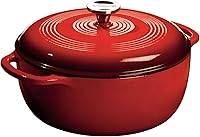
The Lodge 5 Qt Cast Iron Dutch Oven is the pick here. Its cast iron body retains heat well, so the soup keeps simmering steadily after you turn the burner down.
The fitted cast iron lid traps moisture and keeps the broth from reducing too fast.
One thing to plan for is weight. At about 12.8 lb empty, this pot gets heavy once it is full of soup.
Lift it with both hands on the loop handle and set it down on a heatproof surface rather than a bare countertop.
The cast iron needs seasoning care. Hand wash it, dry it fully and rub on a thin coat of oil after each use so the surface stays ready for the next batch.
Pick 4 to 5 qt if you cook for two to four people and want leftovers; size up only when your recipes regularly run past 3 qt of finished soup.
When is a 6 to 7 qt Dutch oven the better fit?
Go with 6 to 7 qt for a family of four to six, or whenever your soup recipes regularly call for 4 to 5 qt of liquid. This is the sweet spot for most households cooking a full meal in one pot.
A 6 qt oven makes roughly 5 to 7 bowls. It gives you enough surface for browning onions and meat before the liquid goes in, which is where much of the flavor in a good soup comes from.
The Cooks Standard 6 Qt Stainless Dutch Oven fits this band without the cast iron weight. Its 18/10 stainless steel body has an aluminum disc in the base that spreads heat evenly and helps avoid hot spots.
The tempered glass lid has a steam vent so you can watch the soup without lifting the lid.
At 5 lb empty, it is easier to move than a cast iron pot of the same size. It works on induction, gas and electric cooktops, and it is dishwasher safe.
The glass lid is rated to 350°F while the pot itself goes to 500°F, so keep that in mind if you finish a soup under the broiler.
The 7 qt Lodge Cast Iron Dutch Oven is the step up when you feed a bigger table. Its extra quart gives you room for a chunky stew or a soup with a lot of vegetables, and the cast iron lid holds heat in through a long cook.
It weighs about 17.6 lb empty, so plan where it will live before you fill it. A 7 qt pot also takes more cabinet and burner space than the 5 qt version.
Pick 6 qt in stainless for everyday family soup and 7 qt in cast iron when you want more capacity and steady heat for long simmers.
How much headroom does soup need in the pot?
Leave about 1 in of space below the rim, which works out to filling the pot no more than two-thirds full. Soup expands as it heats, and starchy ingredients like pasta and rice foam up as they cook.
That headroom also gives you room to stir without splashing. A pot filled to the brim forces you to stir slowly and risks a boil-over that coats your stovetop.
For a 6 qt oven, two-thirds full is about 4 qt of soup. That is still a big batch, roughly 5 to 7 bowls, so the size band and the fill rule work together rather than against each other.
If you are unsure, start with the smaller pot and a smaller batch. It is easier to cook two rounds than to manage a pot that threatens to overflow.
The wider the pot, the more surface area the soup has to evaporate from. A wide 7 qt oven reduces broth faster than a tall 5 qt one, so you may need a lower heat or a lid left partly on.
Treat two-thirds full as your working limit for any soup, and choose the pot size from the batch you actually plan to make.
Which size works for stock, freezer batches and crowds?
Choose 9 qt or larger when you make stock, simmer bones or vegetable scraps, or cook for a crowd. Bigger pots hold more water and lose less to evaporation over a long simmer, which gives you a deeper broth.
For freezer batches, a 7 qt oven is often enough. Make a full pot, cool it quickly, then portion it into containers.
One large cook session fills the freezer without tying up your everyday pot for days.
If you already own a 5 qt oven, adding a 7 qt gives you a useful pair: the small one for weeknights and the large one for stock, chili and party soup. Two pots also let you cook a base and a second batch without washing up in between.
If you live alone or cook for one, the smaller end of the range matters more. Our guide to what size dutch oven for 1 person covers the 2 to 3 qt options that suit single servings.
Pick 9 qt or more for stock and crowd cooking, and a 7 qt oven for freezer batches unless you regularly simmer bones.
How does Dutch oven weight affect your choice?
Weight is the trade-off you feel every time you lift the pot. A 5 qt cast iron oven weighs about 12.8 lb empty and a 7 qt version about 17.6 lb, before any soup goes in.
A full 7 qt pot can pass 20 lb, which is a lot to lift from the stovetop to the counter. If you have wrist or shoulder issues, a stainless oven in the same size is easier to handle.
Cast iron earns its weight with heat retention. Once the pot is hot, it holds temperature through stirring and adding cold ingredients, so the soup returns to a simmer quickly.
Stainless steel heats faster and responds to burner changes sooner. That makes it easier to control a delicate broth or a cream soup that should not boil hard.
Weight also affects storage. A heavy cast iron pot is best kept on a shelf at waist height or on the stovetop, not on a high cabinet you have to reach into.
Choose cast iron when steady heat matters more than lifting; choose stainless when you want a lighter pot you can move easily.
Will your chosen size fit your burner and oven?
Check the base diameter against your burner before you buy. A pot that overhangs a small burner heats unevenly, and one that sits on a burner smaller than its base can scorch the center.
The Cooks Standard 6 qt oven measures 9.5 in across the base and 12 in wide including the handles. That fits most standard burners, though a very small simmer burner may not heat the full base.
The 5 qt Lodge and 7 qt Lodge are wider still once you count the loop handles. Measure your largest burner and your stovetop gaps, especially if you cook on a compact range.
Oven fit matters too. A 7 qt oven with handles takes more rack space than a 5 qt one, and you need clearance above the rim if you plan to brown a topping.
Our guide to are dutch ovens oven safe explains the temperature limits and lid rules for each type.
The stainless Cooks Standard pot goes to 500°F in the oven, while its glass lid is rated to 350°F. Both Lodge ovens are oven safe to 400°F.
Measure the burner and the oven rack before you commit; a pot that fits the recipe but not the stove wastes both.
Which shape works best for soup?
A round Dutch oven suits soup best because it circulates heat evenly and fits most burners. The curved sides let you stir without corners where ingredients catch.
An oval oven gives you more surface area for browning meat and vegetables before the liquid goes in. That extra width helps when you sear in batches for a stew or a meat-heavy soup.
The trade-off is stovetop space. An oval pot takes up more room and may not sit well on a small burner.
It also needs more cabinet space when stored.
A round 6 qt oven is the safe default for soup. It handles liquid evenly, works on any burner shape and stores in a standard cabinet.
If you brown ingredients often, a wide round or oval oven in the 6 to 7 qt range gives you both browning room and enough depth for the liquid.
Choose round for even simmering and easy storage; choose oval only when browning in the same pot is a priority.
How do you match the size to your soup style?
Match the pot size to the thickness and volume of the soup you make most. Thin broths need less headroom but more depth to keep from reducing too fast.
Clear broths and consommés do well in a tall, narrow pot where less surface is exposed. Chunky vegetable soups and minestrone need width for stirring and room for the pieces to move.
Cream soups and bisques should not boil hard, so a pot with good heat control helps. Stainless steel responds faster when you need to drop the heat.
Bean and lentil soups swell as they cook, so give them extra headroom. A 6 qt oven filled two-thirds full leaves room for the beans to expand without foaming over.
If you make a lot of one type of soup, buy for that style first. A 6 qt oven covers most soup recipes, and the 7 qt adds room for the chunkiest batches.
Buy for the soup you cook most, not the biggest batch you might make once a year.
How should you store and care for a soup-sized Dutch oven?
Store the pot where you will use it most, and dry cast iron fully before putting it away. A 5 to 7 qt oven is too heavy to haul out of a deep cabinet every week.
Keep the lid off or ajar when storing cast iron so air can reach the surface. A paper towel between the pot and lid helps prevent trapped moisture.
Stainless ovens are simpler to store. The Cooks Standard pot is dishwasher safe, so it can go straight from the counter to the rack.
For cast iron, hand wash, dry on the stovetop over low heat and rub on a thin coat of oil. That routine keeps the seasoning intact and the surface ready for the next batch.
If you want a second pot for bread or braising, a double dutch oven set gives you an oven and a skillet lid in one. And for the widest range of sizes in cast iron, see our roundup of the cast iron dutch oven options.
Store the pot within easy reach, keep cast iron dry and seasoned, and let the stainless one go in the dishwasher.
The verdict: pick the size from your batch, not the recipe title
For most homes, a 6 qt Dutch oven is the best size for soup. It covers family batches of 4 to 6 servings, leaves proper headroom and still fits a standard burner and cabinet.
Choose a 4 to 5 qt oven if you cook for two to four people and want a lighter pot. Step up to 7 qt for larger families or long simmers, and go to 9 qt or more only for stock and crowds.
So when you ask what size dutch oven for soup to buy, start with the batch you make most weeks. Add 1 to 2 qt for headroom, check the burner and oven fit, then pick cast iron for steady heat or stainless for easier handling.
That rule keeps the pot useful for years rather than just one big cook.
Frequently asked questions
Is a 5 qt Dutch oven big enough for soup?
A 5 qt oven makes about 4 to 5 generous bowls of soup, enough for a small family or a few portions with leftovers. It handles most weeknight recipes, but fill it only about two-thirds full when the soup starts to bubble.
How many people does a 6 qt Dutch oven feed with soup?
A 6 qt oven holds roughly 5 to 7 bowls, depending on how thick the soup is. Thin broths go further than chunky stews, and leaving 1 in of headroom matters more than the exact serving count.
Can I use an 8 qt Dutch oven for a small batch of soup?
Yes, but a wide 8 qt pot leaves a shallow layer of soup that heats unevenly and dries out around the edges. Use the smaller oven for everyday batches and bring out the large one for stock, freezer meals or guests.
Does the shape of the Dutch oven matter for soup?
A round oven circulates heat evenly and fits most burners. A wide oval oven gives you more surface for browning and stirring, but it needs more stovetop room and can crowd smaller hobs.
What size Dutch oven makes a good stockpot?
Use 9 qt or larger when you simmer bones, vegetable scraps or whole chickens for stock. Bigger pots hold more water and reduce less quickly, which gives you a deeper, more concentrated broth over a long simmer.