Tramontina Dutch Oven vs Lodge: Which Is Better? (October 2026)
Choose the Lodge 6 Qt for extra capacity and a 500°F oven limit; choose the Tramontina Bestow 5.5 Qt for a lighter pot with a self-basting lid. Your usual batch size, recipes and comfort lifting a full pot make the decision.
On this page (9 sections)
- Tramontina Dutch oven vs Lodge: which should you choose?
- How much capacity do your usual meals need?
- How does the weight affect lifting and storage?
- What do the Tramontina and Lodge lids offer?
- Can both pots handle your stovetop and oven?
- What should you know about enamel care?
- Which one fits bread, soup and braising?
- What common buying and cooking mistakes should you avoid?
- Which is the clear choice for your kitchen?
Choose the Lodge 6 Qt for extra capacity and a 500°F oven limit; choose the Tramontina Bestow 5.5 Qt for a lighter pot with a self-basting lid. In the Tramontina Dutch oven vs Lodge comparison, those differences matter most when you match them to the recipes you make and the pot you can comfortably lift.
Both are round enameled cast iron Dutch ovens suited to stovetop and oven cooking. Lodge gives you another half quart of capacity, while the Tramontina is 3 pounds lighter when empty.
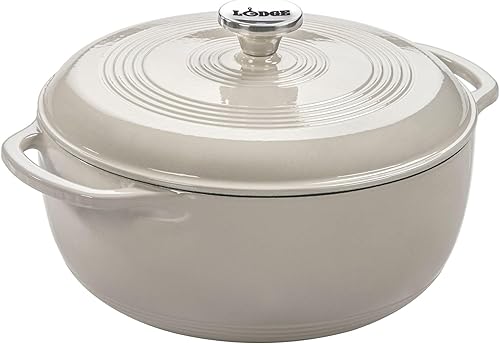

Tramontina Dutch oven vs Lodge: which should you choose?
Choose the Lodge if you need its extra capacity or cook above 450°F; choose the Tramontina if its lighter weight and lid design suit your routine. These are close in capacity, so a small difference in volume should not decide the purchase on its own.
The Lodge holds 6 quarts and weighs 14.9 pounds. The Tramontina holds 5.5 quarts and weighs 11.9 pounds.
The Lodge’s 500°F oven limit gives you more range for high-heat recipes. The Tramontina’s stated limit is 450°F, which covers recipes cooked at or below that temperature.
If your batches regularly fill a 5.5-quart pot, the Lodge gives you more room. If your usual recipes fit comfortably and you want to handle a lighter empty pot, the Tramontina is a strong match.
For a larger jump in capacity, compare both with our guide to large Dutch ovens. The Lodge’s extra half quart is a modest increase, not a substitute for a pot made for big batches.
How much capacity do your usual meals need?
The Lodge offers a little more space for larger meals, while the Tramontina can suit recipes that fit in 5.5 quarts. Think about your regular soups, braises and baked dishes instead of sizing up for a rare gathering.
A pot’s capacity is not the same as the amount of food you can comfortably cook in it. Ingredients need room for liquid, stirring and expansion, and some recipes work better without filling the pot to the brim.
If you often cook double batches or have to split recipes between pots, the Lodge’s extra room may save a step. If your usual meals leave room to stir in a 5.5-quart pot, the Tramontina’s smaller capacity is unlikely to hold you back.
Cooks who mainly prepare meals for 1 or 2 people may find the capacity difference less important than storage and lifting. Our cast iron Dutch oven guide explains how these pots fit into different cooking routines.
Is the Lodge capacity worth the added weight?
The Lodge makes sense when its extra half quart solves a real batch-size problem. If your recipes already fit, the Tramontina’s lower empty weight may be the more useful difference.
A full pot will weigh more than either empty-pot figure. Leave room in your decision for the weight of food, the distance from oven to counter and where you plan to set the hot pot down.
How does the weight affect lifting and storage?
The Tramontina is 3 pounds lighter when empty, which can make it easier to handle. The weight difference matters most when moving a full pot or taking it in and out of a low oven.
Both pots have cast iron handles. Use both hands with oven mitts when transferring either Dutch oven, and make sure your counter or trivet is ready before you lift.
Storage is another part of the decision. Measure the shelf where you plan to keep the pot, and consider whether you can lift it down safely without reaching over other cookware.
If reducing lifting effort is a priority, browse our lightweight Dutch oven guide. It can help you decide whether either of these cast iron pots is a comfortable fit for your kitchen.
What do the Tramontina and Lodge lids offer?
The Tramontina lid has condensation ridges that direct vapor back onto food. That design can be useful for braises and other dishes where moisture retention matters.
The Lodge has a moisture-sealing lid. Both lids are cast iron, so use an oven mitt when lifting one during cooking and set it on a heat-safe surface.
A lid does not replace the recipe’s instructions. Follow the suggested covered or uncovered cooking time, especially near the end of a braise or bake when you may want more evaporation.
Can both pots handle your stovetop and oven?
Both are designed for stovetop and oven cooking, but the Lodge has the higher stated oven limit. Tramontina is compatible with gas, electric, ceramic glass and induction cooktops, and safe in the oven up to 450°F.
The Lodge is stovetop compatible and safe in the oven up to 500°F. Gas, electric, ceramic and induction cooktops are named as compatible surfaces for it.
Check the recipe temperature before you buy. At 450°F or below, both fit their stated limits; for recipes above 450°F and up to 500°F, the Lodge is the fit between these two.
For more guidance on oven use, read whether Dutch ovens are oven safe. On a glass surface, lift either pot when moving it so the heavy base does not scrape the cooktop.
What should you know about enamel care?
Hand washing is a sensible care routine for both pots. Tramontina specifies hand washing, while Lodge says its pot is dishwasher safe but recommends warm, soapy water and a nylon scrub brush.
Both have porcelain enamel cooking surfaces. Tramontina describes its interior as non-reactive and free of PTFE and PFOA; Lodge describes its enamel surface as non-reactive with acidic ingredients and free of PFAS.
Let a hot pot cool before washing, and use a soft nylon brush rather than an abrasive scrubber. For stubborn food, soak the pot in warm soapy water instead of scraping the enamel with metal.
Enameled cast iron does not need seasoning like bare cast iron. Our guide to cast iron vs enameled Dutch ovens covers the care differences and helps clarify which finish fits your habits.
Which one fits bread, soup and braising?
Both can suit bread baking, braising and simmering, with the recipe temperature helping separate them. The Lodge has a higher oven limit, and the Tramontina lid directs condensation back onto food.
Lodge is described for bread baking, braising, marinating and slow cooking. Tramontina’s stated uses include braising, roasting and bread baking.
For bread, check the recipe’s preheating and baking temperatures before putting the pot in the oven. Use the pot only within its stated limit, and handle the lid with mitts when you add or remove dough.
For step-by-step setup advice, use our Dutch oven bread baking guide. If bread is the main reason you want a covered pot, see our best bread ovens guide for other options.
What common buying and cooking mistakes should you avoid?
The biggest mistake is choosing by capacity alone without checking weight and oven temperature. A pot that holds enough food still needs to fit your lifting comfort, storage space and recipes.
Avoid assuming that the higher heat limit applies to both. The Lodge is safe to 500°F, while the Tramontina is safe to 450°F, so use the limit for the pot you own.
Don’t fill either pot to the rim. Leave room for stirring and bubbling, and check that your recipe’s volume fits with space to spare.
Treat enamel carefully during cooking and cleanup. Avoid banging the pot against a hard surface, scraping the interior with metal utensils, or moving a hot pot before you have a safe place to set it down.
Which is the clear choice for your kitchen?
Pick the Lodge for larger batches and recipes that need temperatures between 451°F and 500°F; pick the Tramontina when 5.5 quarts is enough and easier lifting matters more. The Lodge’s extra capacity is modest, but its higher oven limit is a clear advantage for hotter recipes.
The Tramontina is the better fit for cooks who value a lighter empty pot and a lid with condensation ridges. Skip it if your recipes exceed 450°F or you regularly need more than 5.5 quarts.
The Lodge suits cooks who want a little more capacity and broader oven-temperature range. Skip it if the added weight is difficult to manage and your recipes do not need the extra space or heat limit.
For the Tramontina Dutch oven vs Lodge decision, start with the highest temperature you cook at, then consider batch size and lifting comfort. If you want to compare more enamel shapes, see our guide to oval Dutch ovens.
Frequently asked questions
Is Tramontina or Lodge better for a Dutch oven?
The Lodge suits you if you want 6 quarts of capacity and an oven limit of 500°F. Choose the Tramontina if 5.5 quarts is enough and its lower empty weight or self-basting lid is more useful to you.
Compare the size of your regular recipes and the highest temperature you need before deciding.
Which Dutch oven is lighter, Tramontina or Lodge?
The Tramontina Bestow weighs 11.9 pounds, while the Lodge weighs 14.9 pounds. That 3-pound difference can matter when lifting an empty pot or moving it from the oven.
Food adds weight to both, so plan to use oven mitts and a secure two-handed grip.
Can both Dutch ovens be used on induction?
The Tramontina is compatible with induction, gas, electric and ceramic glass cooktops. The Lodge is stovetop compatible, with gas, electric, ceramic and induction cooktops named among its compatible surfaces.
On a glass cooktop, lift the pot instead of sliding it, and follow the care instructions for your model.
Which Dutch oven is better for bread baking?
Either pot can suit bread recipes that stay within its oven limit. The Tramontina is oven safe to 450°F, while the Lodge is oven safe to 500°F, giving the Lodge more room for recipes that call for higher heat.
See our guide to baking bread in a Dutch oven for setup advice.


